Science needs freedom

Freedom is the foundation of scientific work. Without it, there can be no independent research or social progress. But this freedom is coming under pressure worldwide. Political influence, demands for the cancellation of unwelcome events and international tensions pose growing challenges for scientists and universities.

A cooperation between Freie Universität Berlin, Humboldt-Universität zu Berlin and the SCRIPTS Cluster of Excellence.

Academic freedom is not a matter of course

Academic freedom is not a privilege. As can be observed worldwide, it is also not a matter of course. However, it is the prerequisite for universities to remain what they should be: Places of knowledge, innovation - and contradiction. Only free science can answer the big questions of our time.

We provide insights into current debates, shed light on legal, political and ethical dimensions and offer academics from both universities a platform to make their professional perspectives and expertise visible. The aim is to make academic freedom tangible - for researchers, students and anyone who wants to help shape science. Freie Universität and Humboldt-Universität stand for a strong, open academic system that is based on autonomy, responsibility and critical discourse.
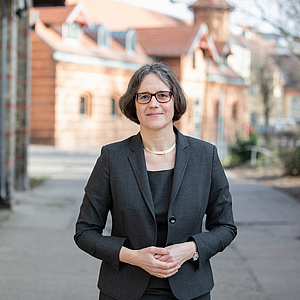
In Germany, freedom of science and research is enshrined in the Basic Law and protected as a fundamental right. It knows no boundaries apart from fundamental constitutional values. We can see how important this is from current developments in the USA and elsewhere. Anyone who wants to advance society and the economy through research and new findings must be able to work freely. The freedom of science and the fundamental values of the constitution are high values that we at Humboldt-Universität stand up for and defend.

Julia von Blumenthal

President of the Humboldt-Universität zu Berlin
Julia von Blumenthal

Julia von Blumenthal

President of the Humboldt-Universität zu Berlin

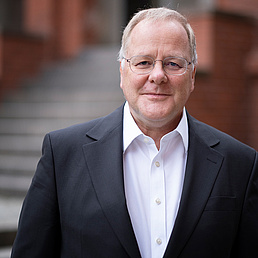
Societies develop most strongly and perform best when people are able to develop their potential and talents freely, independently and reflectively. The basis for this is that independent information and broad scientific expertise are available to them. Freedom of science is therefore a basic prerequisite for innovative, self-effective co-operation - and for democracy.

Günther M. Ziegler

President of Freie Universität Berlin
Günter Matthias Ziegler

Günther M. Ziegler

President of Freie Universität Berlin

History obliges

The history of our two universities is closely linked to issues of democracy, responsibility and international cooperation - and makes the topic of academic freedom particularly relevant for our academic communities. Freie Universität Berlin was founded in 1948 by professors and students in response to the persecution of students critical of the system at Unter den Linden University in what was then the Soviet sector of divided Berlin. Since its foundation, Freie Universität has seen itself as a place of open exchange and critical reflection. The Humboldt-Universität zu Berlin - founded in 1809 as Friedrich-Wilhelms-Universität and renamed Humboldt-Universität in 1949 - was founded with the aim of thinking science in terms of social responsibility - and acting as a creative force for the future.

(Founding) history is an obligation - especially today, at a time when academic freedom is coming under pressure: due to political expectations, debates about so-called "cancel culture", international dependencies or economic influence. With the joint thematic focus "Academic Freedom", we want to inform, sensitise and strengthen the discourse. What does academic freedom mean today - both individually and institutionally? Where are its limits, where is it under threat? And what responsibility does science itself bear?

Voices on academic freedom

Results 1 to 8 of 9
Georg Essen trägt ein weißes Hemd und einen dunkelfarbenen Anzug. Er steht vor dem Eingangsportal des Zentralinstituts für Katholische Theologie der HU. Es ist ein rotfarbenes Backsteingebäude.
|
Research

Truth and freedom are mutually dependent. Georg Essen, Professor of Systematic Theology at the HU, sheds light on why academic freedom is essential in order to maintain a connection to reality in a democracy.

|
International

The Alexander von Humboldt Foundation has announced the call for applications for the 17th round of the Philipp Schwartz Initiative to support at-risk and displaced researchers. Nominations are accepted until 25 January.


|
Research

Academic freedom is considered secure. Yet even in Germany, tendencies towards self-censorship exist, and they can reshape public discourse. Universities have to defend the freedom of research and to empower their researchers to do the same.


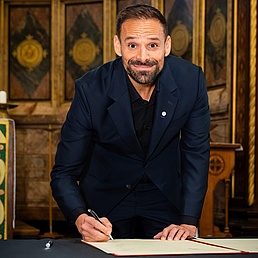
A man signs an agreement in a ceremonial hall
|
International

Humboldt-Universität has signed the Magna Charta Universitatum (MCU), in its 2020 revised version. The document, originally adopted in 1988, serves as a declaration of values and has so far been endorsed by 1011 universities in 94 countries.

|
Open Humboldt

Focus and expertise at Humboldt-Universität on the topic of academic freedom.

Julian Hamann lächelt in die Kamera und steht vor einer hellen Wand und trägt ein schwarzes Hemd
|
Open Humboldt
Research
Teaching

The first representative survey on academic freedom at German universities presents an overall positive picture. At the same time, researchers do perceive certain limitations. A more objective, evidence-based discussion is necessary.

Christoph Möllers steht vor einer Hecke. Er trägt einen dunkelblauen Anzug.
|
Open Humboldt
Research
Teaching

Academic freedom protects not only individual researchers, but also universities. Political influence remains a danger - self-administration, legal protection and solidarity are required.

Romy Jasper steht hinter einem Rednerpult. Vor ihr ist ein Mikrofon und sie blickt freundlich in die Kamera.
|
Study
Open Humboldt
Research
Teaching

At universities, the invitation or disinvitation of politically exposed speakers often leads to controversy. The decision about who may or may not speak should be guided by the university’s core mission.